
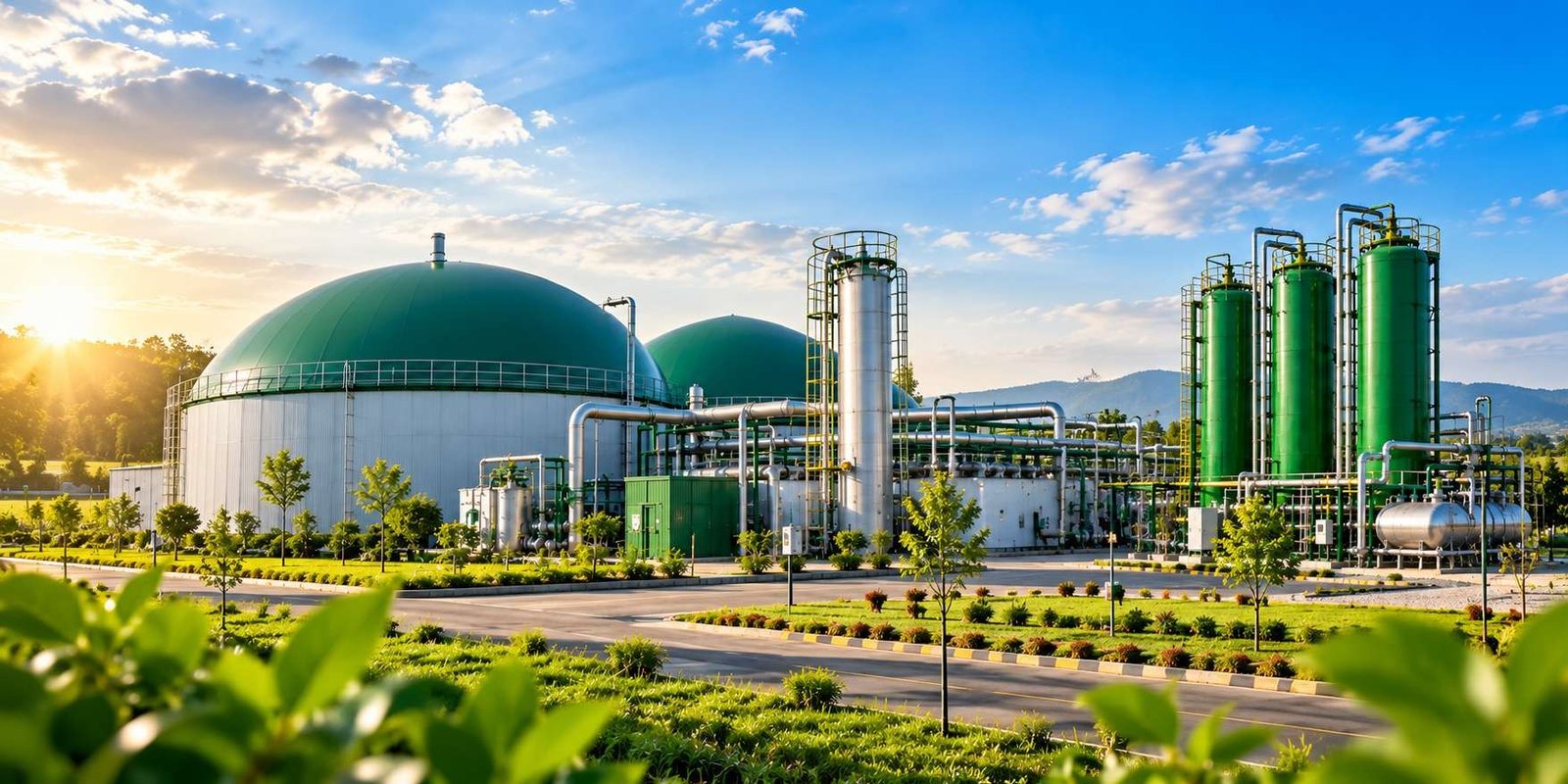
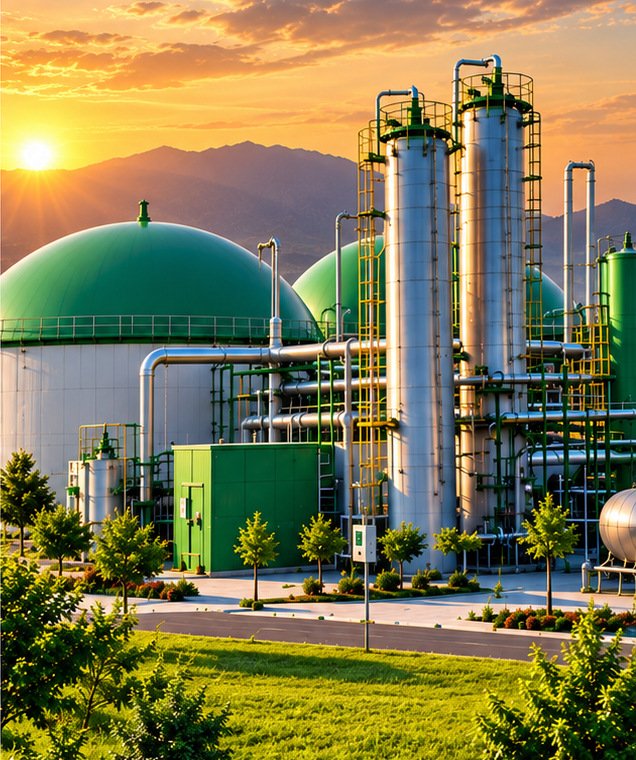

Nav Vasundhara compressed bio-gas plant with green digester domes and purification towers beside agricultural fields at sunrise

Clean Energy · Sustainable Tomorrow

Turning Waste into Clean Energy.

A 5 Tons Per Day (TPD) Compressed Bio-Gas manufacturing facility in Belagavi, Karnataka — driving India's green energy transition through sustainable waste-to-wealth initiatives.

  • 5TPD

    CBG Production Capacity

  • ₹40Cr

    Total Capital Investment

  • 107.5Acres

    Captive Feedstock Footprint

  • 4+ Decades

    Leadership Experience

About Us 01

A New Energy from What We Waste.

Nav Vasundhara Green Energies Pvt. Ltd. is a progressive, forward-integrated renewable energy enterprise, incorporated to drive India's green energy transition through sustainable waste-to-wealth initiatives.

Headquartered in Karnataka, we are establishing a state-of-the-art 5 TPD Compressed Bio-Gas (CBG) manufacturing facility in the agro-rich Belagavi district, with a total capital investment of INR 40 Crores. Using advanced anaerobic digestion, the plant will turn regional agricultural residue, press mud and dairy waste into high-purity, transport-grade CBG and nutrient-rich organic manure.

Location
Belagavi, Karnataka
Capacity
5 TPD Compressed Bio-Gas
Investment
₹40 Crores
Alignment
SATAT initiative · MNRE guidelines
How the technology works
CBG facility at golden hour with green domed digester tanks, steel purification towers and pipework beside landscaped grounds
Cleaner Energy.
Healthier Planet.

Technology 02

Nature's Oldest Process, Precisely Engineered.

Anaerobic digestion lets microbes break down organic matter in sealed, oxygen-free tanks. What they release — biogas — is cleaned, compressed and sent to market. What they leave behind returns to the soil.

  1. InputAgricultural residue
  2. InputPress mud
  3. InputDairy waste
  4. InputNapier grass
Sealed · O₂-free Anaerobic
Digester
Hydrolysis → Acidogenesis → Methanogenesis
Biogas path

Raw biogas Purification CBG

CO₂, H₂S and moisture scrubbed out; methane-rich gas compressed for transport fuel.

Digestate path

Digestate Separation Organic manure

Nutrient-rich solids and liquids returned to farms as fertiliser.

  1. i.

    Collect

    Residue, press mud and dairy waste are gathered from the captive command area.

  2. ii.

    Digest

    Microbes convert organic matter into biogas inside sealed digesters.

  3. iii.

    Purify

    Biogas is upgraded into high-purity methane meeting transport-fuel grade.

  4. iv.

    Return

    CBG fuels vehicles; digestate becomes organic manure for local soil.

Waste-to-Wealth 03

From Waste to Wealth.

Five connected stages turn what the region's farms, sugar mills and dairies leave behind into fuel for transport and food for the soil.

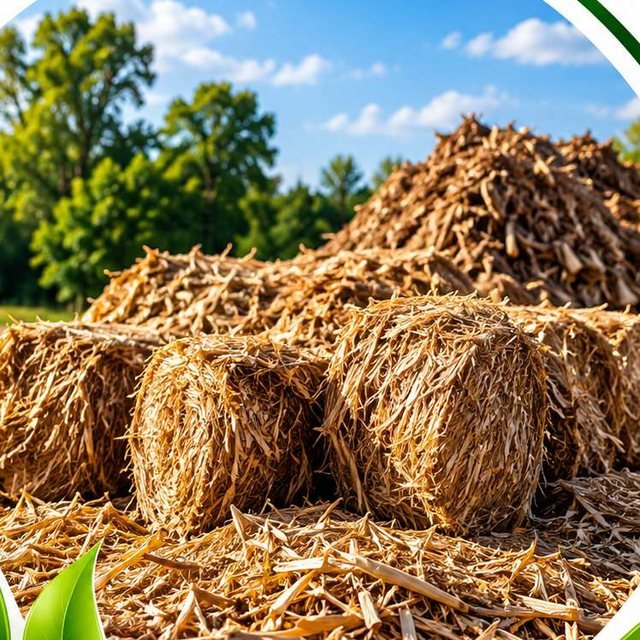
  1. Bales and heaps of dry agricultural crop residue
    01

    Agricultural Residue

    Crop residue, press mud from sugar mills and dairy waste — abundant regional feedstock.

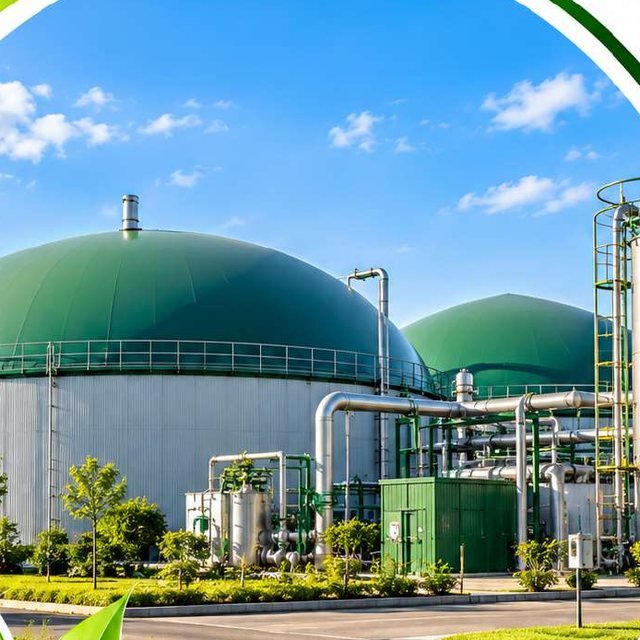
  2. Large green-domed anaerobic digester tanks
    02

    Advanced Anaerobic Digestion

    Sealed digesters let microbes convert organic matter into raw biogas.

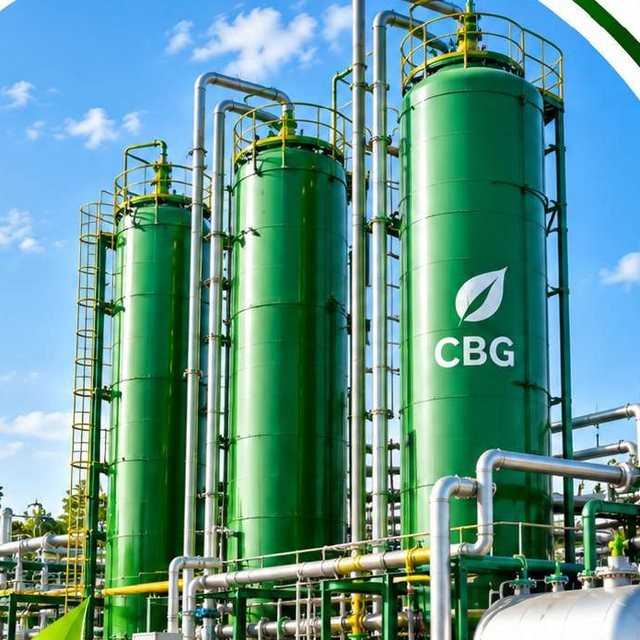
  3. Tall green gas purification columns labelled CBG
    03

    CBG Purification

    Impurities are scrubbed out to reach high-purity, transport-grade methane.

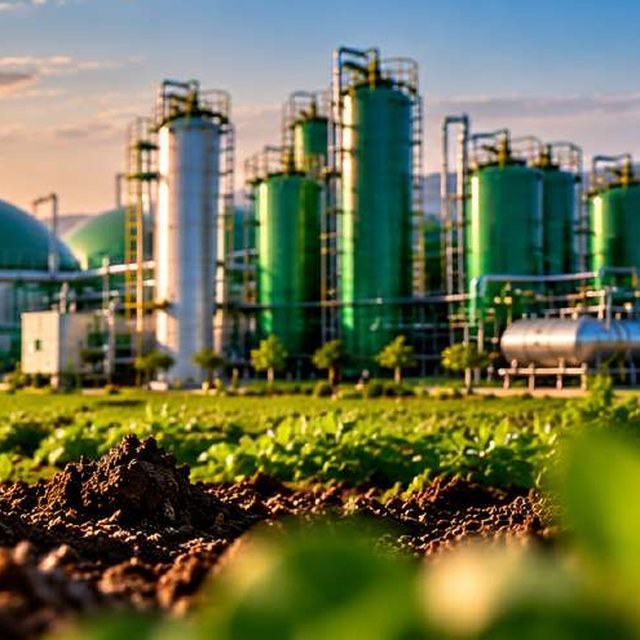
  4. CBG plant towers and storage vessels at sunrise
    04

    Compressed Bio-Gas

    Compressed and supplied as clean fuel under the SATAT framework.

  5. Hands holding rich dark soil with a green seedling
    05

    Organic Manure

    Nutrient-rich digestate returns to farmland, closing the loop.

Project Showcase 04

5 TPD CBG Facility in Belagavi, Karnataka.

A state-of-the-art compressed bio-gas manufacturing facility strategically located in the agro-rich Belagavi district.

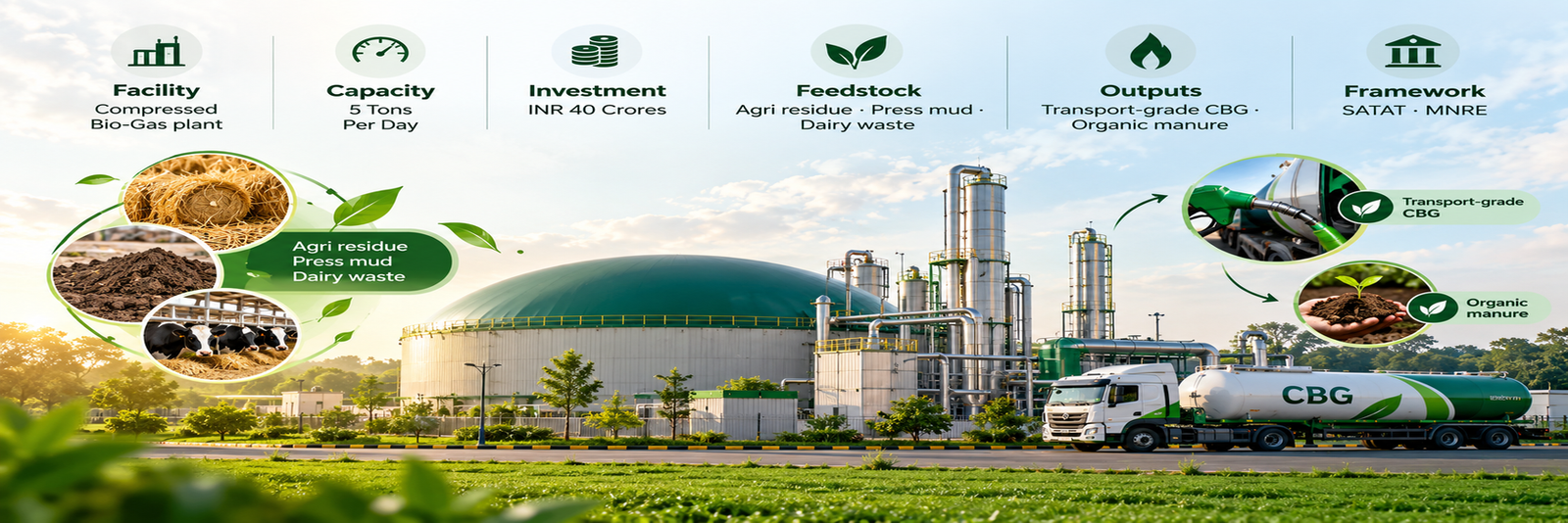
5 TPD CBG facility with a green digester dome, purification towers and a CBG tanker, showing feedstock inputs (agri residue, press mud, dairy waste), outputs (transport-grade CBG, organic manure) and project facts: 5 tons per day, INR 40 crores, SATAT and MNRE framework

Why Vasundhara

Built on Strong Foundations.

Operational stability, secure feedstock and long-term commitment — the fundamentals institutional partners look for.

  • 01

    Captive Feedstock

    The promoter group owns 107.5 acres of prime agricultural land in the immediate command area — a secure pipeline of Napier grass and organic waste, insulated from open-market supply swings.

  • 02

    Experienced Leadership

    An 8-member Board with over four decades of leadership across regional sugar mills, dairy cooperatives and rural credit societies.

  • 03

    Advanced Technology

    State-of-the-art anaerobic digestion and gas upgrading for high-purity, transport-grade compressed bio-gas.

  • 04

    Sustainable Impact

    Clean fuel, organic manure and new rural income — a circular model that serves farmers, industry and the environment together.

Board of Directors 05

Experienced Leadership, Stronger Tomorrow.

An elite 8-member Board commanding over four decades of regional leadership in sugarcane mills, dairy cooperatives and rural agricultural credit networks across the Belagavi belt.

  • Chairman / Principal Promoter

    Mr. Laxman Appasaheb Patil (Balasaheb)

    50% Equity

    40+ years in rural governance and sugar & dairy industry leadership.

    Ex-Sarpanch, Malikwad Gram Panchayat · Director, Shri Gurudatta Sugars Ltd. · Founder Director of a cooperative credit society and a milk producers' cooperative.

    Project role: strategic direction, governance, large-scale feedstock tie-ups and statutory liaison.

  • Director · Agro-Industrial Alliances

    Mr. Babanrao Aadisha Chougule

    30% Equity

    Industrial administration and cooperative financial network management.

    Manager, Shri Gurudatta Sugars Ltd. · Founder Director of several cooperative credit societies · Secretary, Jeevan Shikshan Charitable Trust.

    Project role: sourcing sugar-factory press mud and credit frameworks for feedstock farmers.

  • Director · Legal, Statutory & Compliance

    Adv. Baburao Rama Yadav

    20% Equity

    Corporate and agricultural law, banking compliance and institutional finance governance.

    B.Com, LLB · Practising Advocate · Founder Chairman, Shri Hanuman Sauhard Cooperative Credit Society.

    Project role: legal risk, vendor and offtake contracts, PESO and pollution-board clearances, banking compliance.

Our Vision 06

Creating a Sustainable Tomorrow.

“To catalyse India's waste-to-wealth green transition.”

Aligned with the Government of India's SATAT initiative and MNRE guidelines.
  • Clean Fuel

    Transport-grade CBG that displaces fossil fuel.

  • Rural Prosperity

    New income for farmers who supply feedstock.

  • Sustainable Agriculture

    Organic manure that restores soil health.

  • Circular Economy

    Every input finds a productive second life.

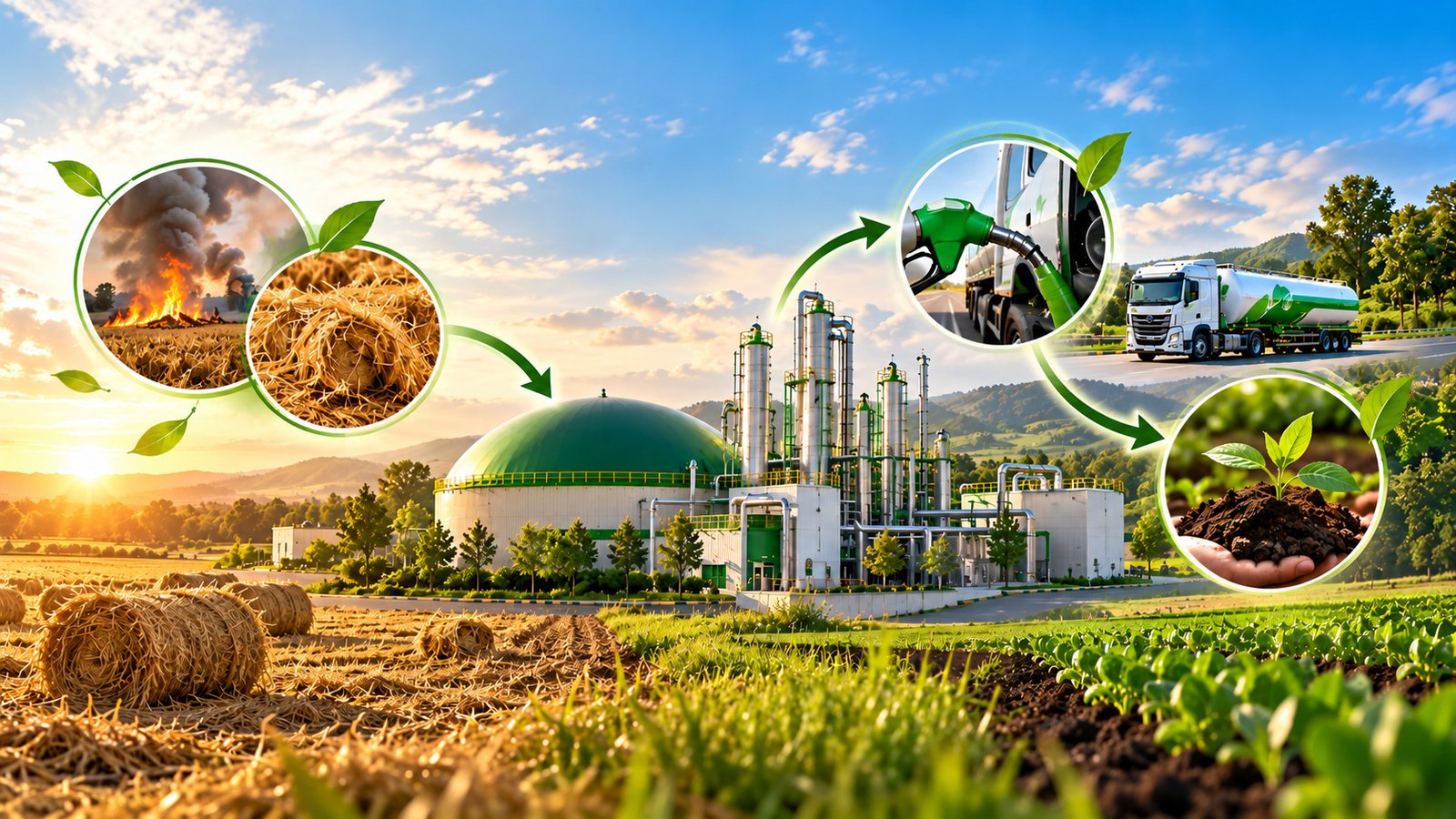
CBG facility with a green digester dome and processing towers between crop-residue fields and green farmland, with circular images of residue burning, straw, a CBG tanker being refuelled and organic manure

Sustainability 07

Cleaner Energy. Healthier Planet.

  • 01Turns crop residue that is often burnt in the open into fuel.
  • 02Replaces fossil fuel in transport with renewable bio-gas.
  • 03Returns nutrients to farmland as organic manure.

Contact 08

Be Part of a Greener Future.

Together, we can transform agricultural resources into tomorrow's clean energy.

Send an enquiry

Opens your email app with the details filled in.

Our Story

01 / 05

Panorama of farmland at sunrise with a seedling in the foreground and the CBG facility on the horizon
Chapter I

Belagavi's fields produce abundant residue every season.

Bales and heaps of dry agricultural crop residue
Chapter II

Crop residue, press mud and dairy waste become feedstock.

Green-domed anaerobic digester tanks
Chapter III

Sealed digesters turn organic matter into biogas.

CBG plant with digester domes, purification towers and pipework under a bright sky
Chapter IV

Purified and compressed, it becomes clean transport fuel.

Hands holding rich dark soil with a green seedling
Chapter V

What remains returns to the soil as organic manure.